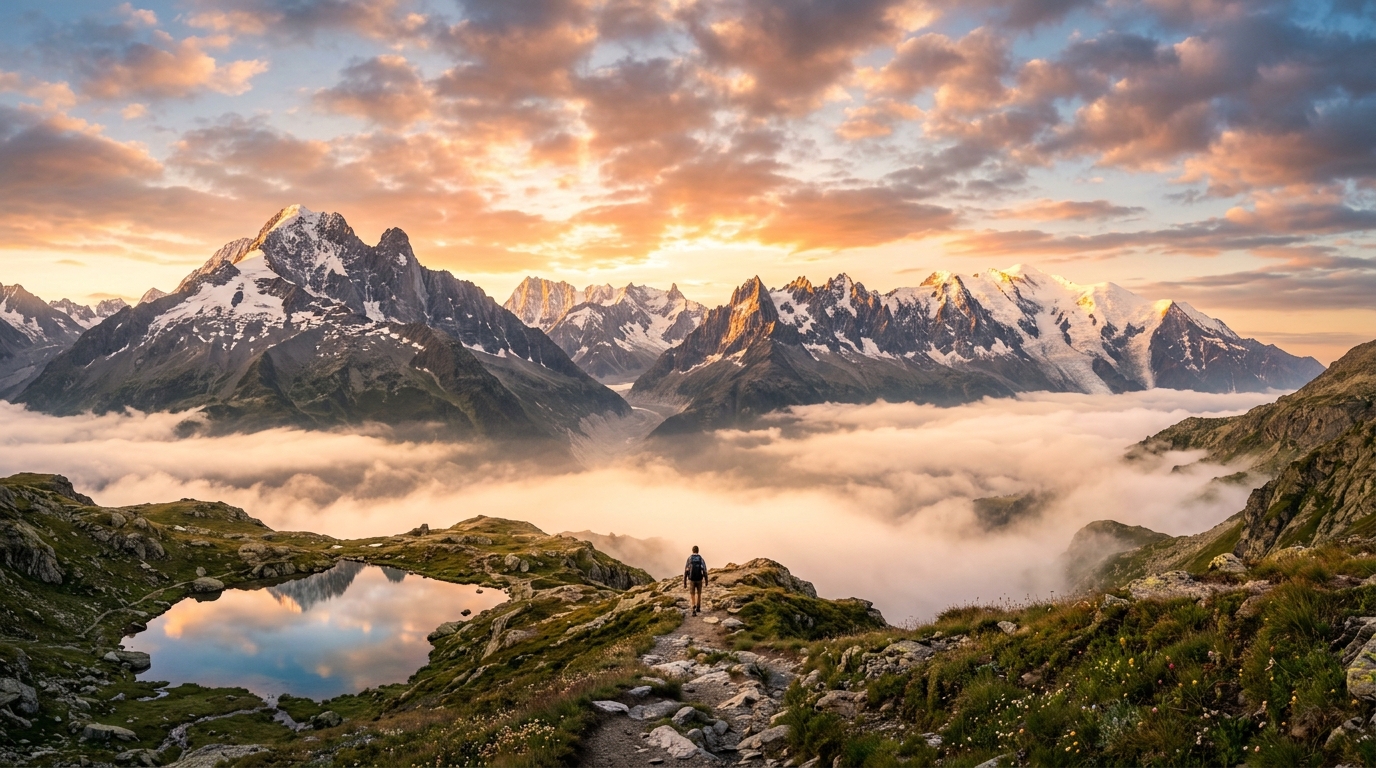
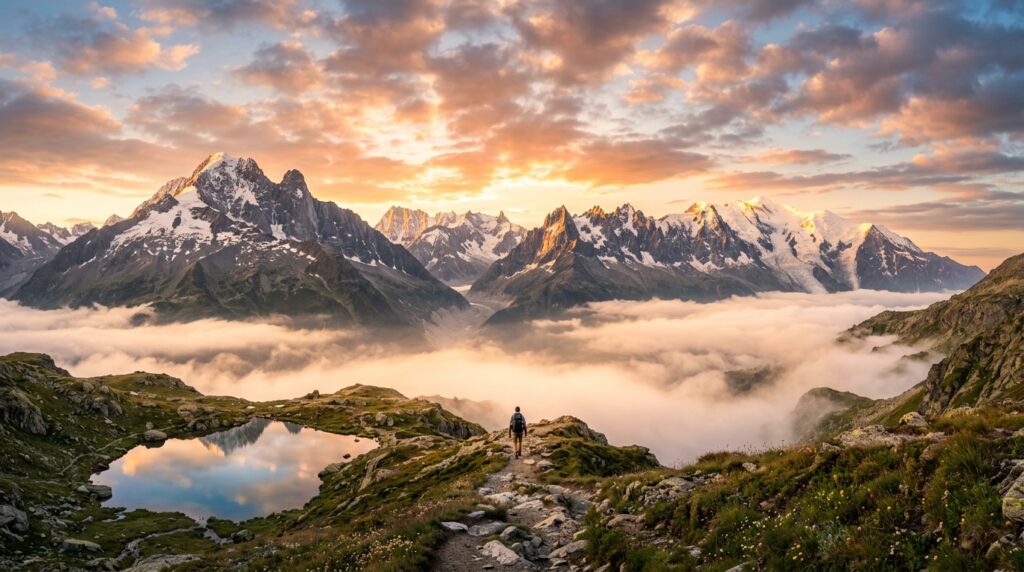
1.Golden Sunrise Over Misty Mountain Peaks
There is something truly magical about witnessing the first rays of sunlight touch the tops of towering mountain peaks. Golden Sunrise Over Misty Mountain Peaks captures one of nature’s most breathtaking daily performances, where darkness slowly gives way to warm golden light. As the sun rises above the horizon, layers of mist drift gently through the valleys, creating a dreamlike atmosphere that transforms an ordinary mountain landscape into a scene of extraordinary beauty.
Landscape photographers often wake long before dawn to capture this fleeting moment. Timing is everything, as the soft golden hour lasts only a short while before the light becomes brighter and harsher. Using a wide-angle lens helps showcase the vastness of the mountains while including the mist-filled valleys and colorful sky in a single frame. A sturdy tripod allows photographers to shoot at slower shutter speeds while maintaining crystal-clear detail throughout the image.
Weather also plays an important role in creating this type of landscape. Cool mornings following humid nights often produce the thickest layers of mist, adding depth and mystery to the composition. Clouds illuminated by shades of orange, pink, and gold provide additional texture and visual interest, making every sunrise unique.
Beyond its technical appeal, this landscape tells a story of peace, renewal, and hope. The rising sun symbolizes new beginnings, while the quiet mountains remind viewers of nature’s timeless strength and beauty. Whether photographed in the Rockies, the Alps, the Himalayas, or any scenic mountain range, sunrise scenes continue to inspire travelers and photographers around the world.
Images like these are perfect for travel blogs, nature magazines, wall art, calendars, Pinterest boards, and photography portfolios. Their timeless beauty encourages people to appreciate the natural world and reminds us that some of Earth’s most spectacular moments happen before the rest of the world has even awakened.
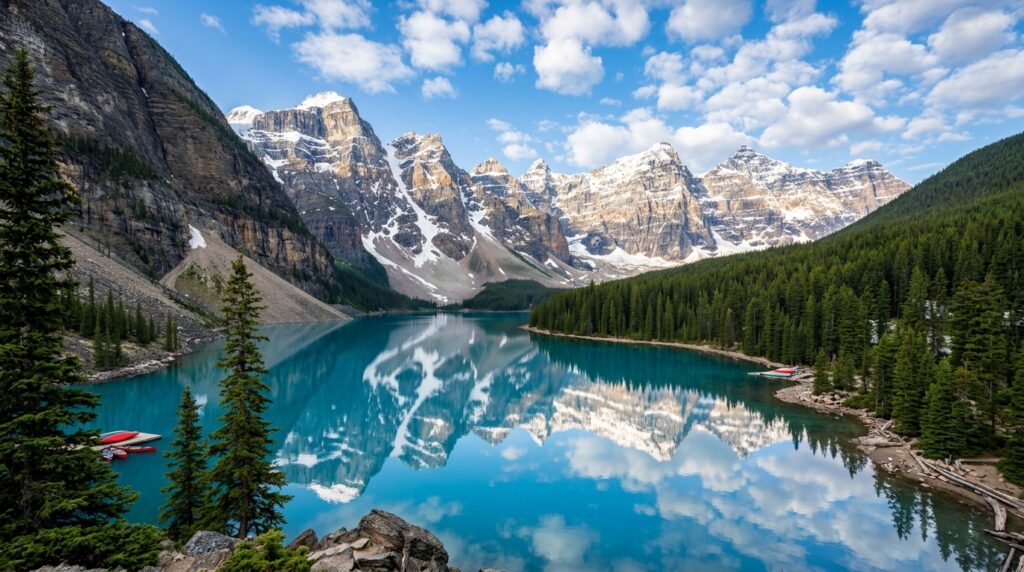
2. Crystal Blue Lake Reflecting Snowy Mountains
Crystal-clear alpine lakes are among the most stunning subjects in landscape photography because they combine brilliant colors, dramatic scenery, and perfect reflections into one unforgettable image. A peaceful lake surrounded by snow-covered mountains creates an atmosphere of serenity that instantly captures the viewer’s attention.
One of the greatest challenges—and rewards—of photographing reflective lakes is finding perfectly calm conditions. Early mornings usually provide the smoothest water, allowing the mountains, forests, and sky to appear like a flawless mirror. The result is a naturally symmetrical composition that feels balanced and visually satisfying.
Photographers often use a wide-angle lens to include the entire mountain range while emphasizing the lake’s reflective surface. Polarizing filters can help reduce unwanted glare and enhance the vibrant blues of the water without removing the beautiful reflections. Careful attention to composition ensures that both the landscape and its reflection work together to create a harmonious image.
Seasonal changes dramatically affect the mood of these scenes. During winter, snowy peaks create a crisp, peaceful atmosphere, while spring and summer bring colorful wildflowers and lush green forests surrounding the shoreline. Autumn introduces brilliant shades of red, orange, and gold that make the reflections even more spectacular.
These landscapes invite viewers to slow down and appreciate nature’s quiet beauty. The stillness of the water symbolizes calmness, while the towering mountains represent strength and permanence. Together they create an image that feels both peaceful and powerful.
Photographs of crystal-blue lakes are widely used in travel publications, tourism campaigns, desktop wallpapers, calendars, social media, and home décor. Their clean compositions and vibrant colors make them timeless examples of landscape photography that continue to inspire outdoor enthusiasts, hikers, campers, and adventure travelers worldwide.
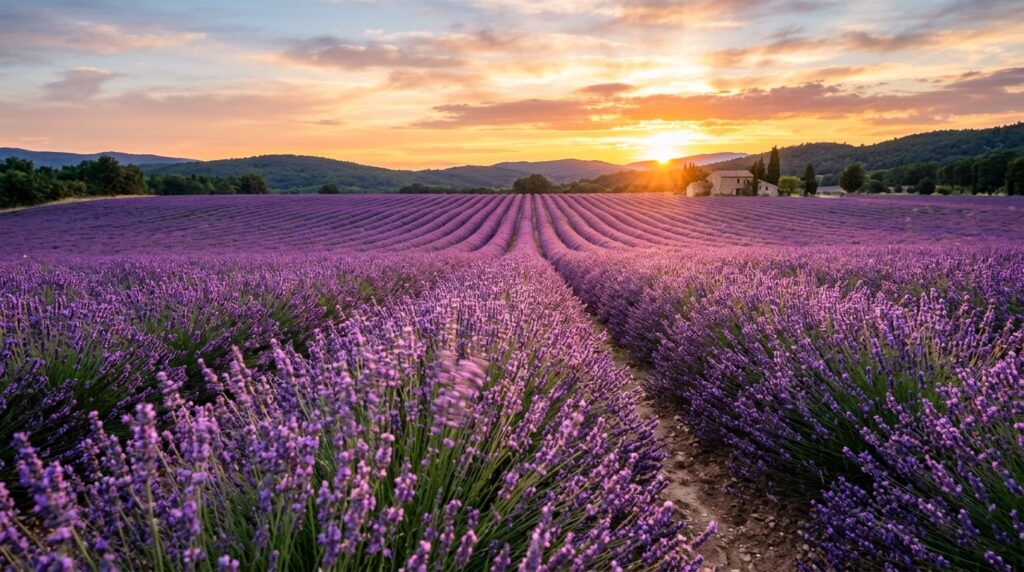
3. Endless Lavender Fields at Sunset
An endless lavender field glowing beneath a colorful sunset is one of the most enchanting scenes a landscape photographer can capture. Long rows of vibrant purple flowers stretching toward the horizon create beautiful leading lines that naturally guide the viewer’s eye through the image. Combined with the warm golden light of sunset, the result is a photograph filled with color, tranquility, and romance.
Lavender reaches peak bloom during the summer months, transforming ordinary farmland into breathtaking seas of purple. The sweet fragrance drifting through the air enhances the experience for photographers, making every visit memorable. As the sun begins to set, warm orange and pink light gently illuminates the flowers, creating striking color contrasts that appear almost magical.
Composition is especially important in lavender photography. Positioning the camera low to the ground emphasizes the repeating rows while making the flowers appear even more abundant. Wide-angle lenses capture the vastness of the landscape, while telephoto lenses compress the rows for dramatic visual patterns.
Weather conditions also influence the final image. Soft clouds often reflect the colors of the sunset, adding depth and texture to the sky. Gentle breezes create movement among the flowers, bringing life and energy into the scene without distracting from its peaceful atmosphere.
Beyond their beauty, lavender fields symbolize relaxation, simplicity, and harmony with nature. These images are popular in travel magazines, wedding inspiration, lifestyle blogs, Pinterest boards, calendars, and home décor because they evoke feelings of calm and happiness.
Whether photographed in the countryside of France, England, or other lavender-growing regions, these landscapes remind us that nature creates masterpieces using nothing more than light, color, and perfect timing.
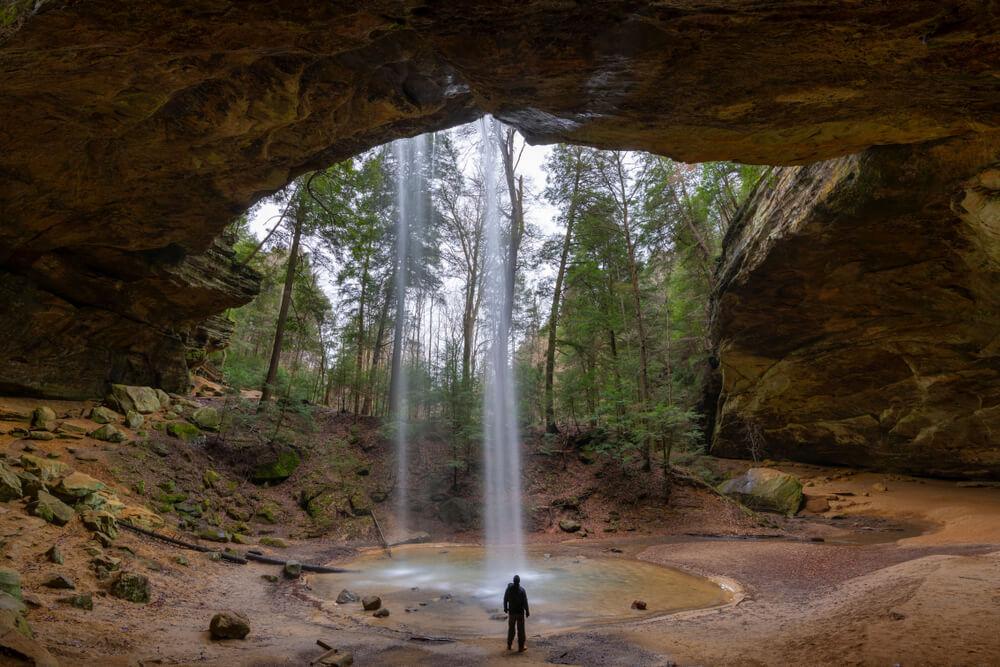
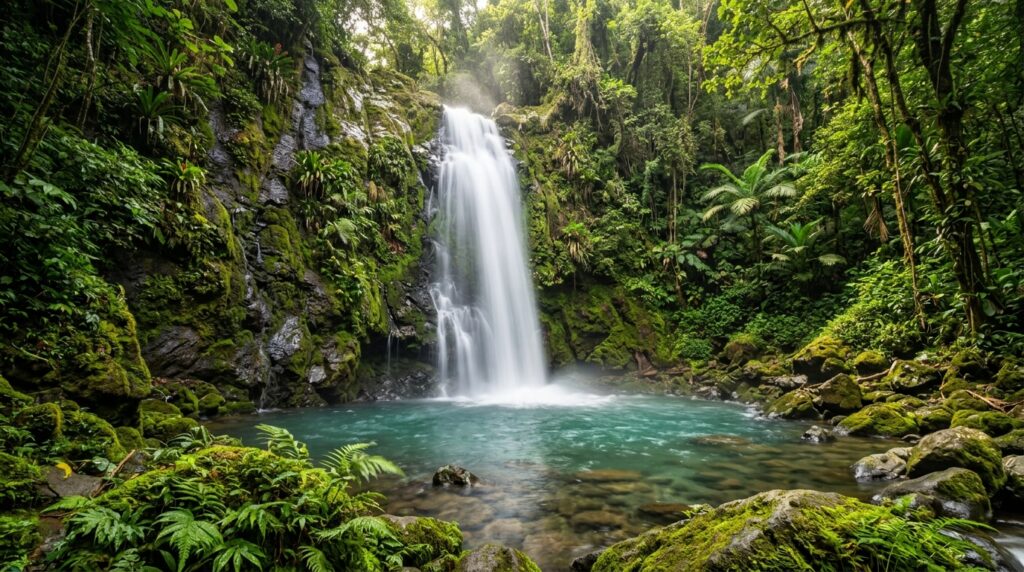
4. Majestic Waterfall Hidden in a Tropical Forest
Hidden deep within lush tropical forests, waterfalls offer some of the most dramatic and rewarding opportunities for landscape photography. Surrounded by vibrant green vegetation, towering trees, moss-covered rocks, and crystal-clear pools, these natural wonders create scenes that feel untouched and timeless.
Photographing waterfalls requires both creativity and patience. Many photographers use long exposure techniques to transform rushing water into silky white streams that contrast beautifully against dark rocks and rich green foliage. A sturdy tripod is essential for achieving this effect while keeping the surrounding landscape perfectly sharp.
Lighting is another important factor. Overcast skies often provide ideal conditions because they eliminate harsh shadows and evenly illuminate the forest. Soft natural light enhances the rich colors of moss, ferns, vines, and tropical plants while preserving detail throughout the image.
Every waterfall has its own unique character. Some plunge dramatically from towering cliffs, while others gently cascade over multiple rocky ledges before flowing into peaceful pools below. Including foreground elements such as large rocks, tree roots, or fallen logs adds depth and creates a stronger visual journey through the photograph.
Beyond technical beauty, waterfalls symbolize strength, movement, renewal, and the continuous flow of nature. The sound of rushing water combined with cool forest air creates a peaceful experience that many photographers remember long after leaving the location.
These breathtaking images are popular in travel advertising, conservation campaigns, fine art prints, calendars, wallpapers, and nature publications. They encourage people to explore protected forests, appreciate biodiversity, and preserve these remarkable ecosystems for future generations.
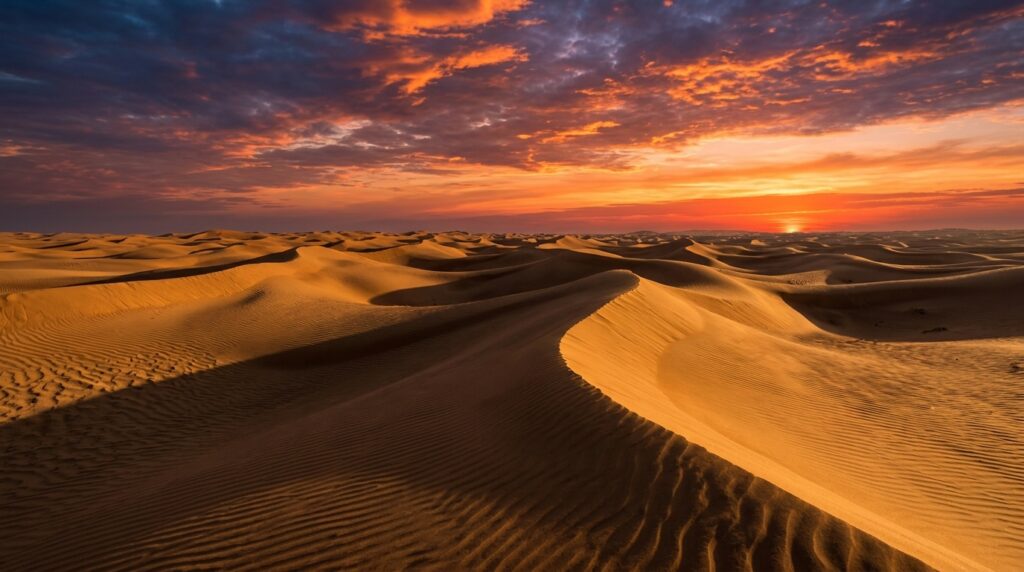
5. Desert Sand Dunes Under a Brilliant Sunset Sky
Deserts possess a unique beauty that is often overlooked until sunset transforms them into landscapes of extraordinary color and texture. Rolling sand dunes sculpted by the wind create elegant curves and patterns that become even more dramatic as the evening sun casts long shadows across the golden landscape.
Sunset is the ideal time for desert photography because the low-angle light enhances every ripple in the sand. Warm shades of gold, orange, amber, and deep red create a rich color palette that changes minute by minute as the sun disappears below the horizon. Dramatic clouds often reflect these vibrant colors, adding depth and excitement to the sky.
Composition plays a vital role when photographing sand dunes. Natural leading lines formed by wind patterns guide the viewer’s eye across the landscape, while carefully positioned footprints—or the absence of them—can dramatically change the mood of the image. Many photographers seek untouched dunes to preserve the feeling of complete wilderness.
Wide-angle lenses emphasize the vast scale of the desert, while telephoto lenses highlight repeating patterns and abstract textures created by shifting sands. Patience is essential because changing light conditions can quickly transform an ordinary scene into an unforgettable masterpiece.
Although deserts may appear empty, they are full of life and resilience. Specialized plants and animals have adapted to survive in these harsh environments, reminding us that beauty often exists in unexpected places.
Desert landscape photographs are widely admired for their simplicity, elegance, and timeless appeal. They are frequently featured in travel publications, fine art galleries, desktop wallpapers, calendars, and interior décor because they inspire feelings of adventure, solitude, and appreciation for Earth’s incredible natural diversity.
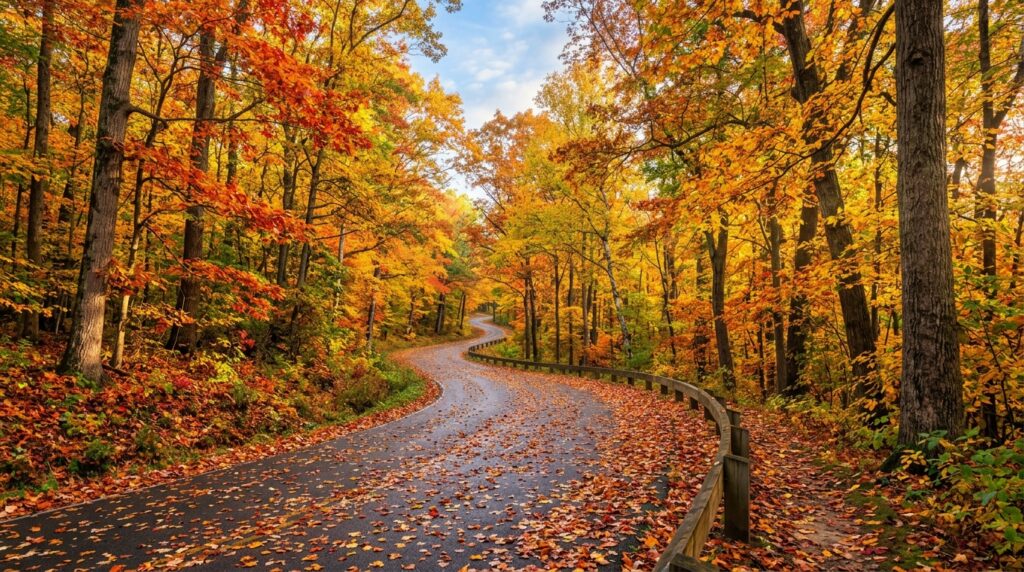
6. Autumn Forest Road Covered in Colorful Leaves
Few landscapes capture the beauty of changing seasons as perfectly as an autumn forest road blanketed with vibrant fallen leaves. As summer fades, forests transform into breathtaking displays of crimson, amber, golden yellow, and burnt orange, creating a colorful tunnel that seems to invite travelers into nature’s masterpiece. This seasonal spectacle offers photographers countless opportunities to create warm, inviting images filled with texture, color, and atmosphere.
The winding road serves as a natural leading line, drawing the viewer’s eye deeper into the photograph and adding a sense of mystery and adventure. Whether the road is paved, gravel, or simply a woodland trail, it creates a visual journey that encourages viewers to imagine where it might lead. Fallen leaves scattered across the ground add richness and texture, while towering trees frame the composition beautifully.
Lighting is one of the most important elements in autumn landscape photography. Early morning provides soft golden sunlight filtering through the colorful canopy, creating long shadows and highlighting the brilliant foliage. After a light rainfall, wet leaves become more vibrant, reflecting sunlight and enhancing the overall richness of the scene. Gentle fog can also add depth and create a magical atmosphere that makes the forest feel peaceful and timeless.
Photographers often use wide-angle lenses to capture the entire landscape while maintaining sharp detail from the foreground leaves to the distant trees. Careful composition ensures balance between the road, trees, and colorful surroundings, producing an image that feels both natural and visually engaging.
Beyond its visual appeal, an autumn forest road symbolizes transition, reflection, and the beauty of change. It reminds us that every season has its own unique charm and that endings often give way to new beginnings. These photographs are perfect for travel blogs, calendars, nature magazines, wall art, Pinterest inspiration, and photography portfolios, where their warm colors and peaceful atmosphere continue to captivate viewers year after year.
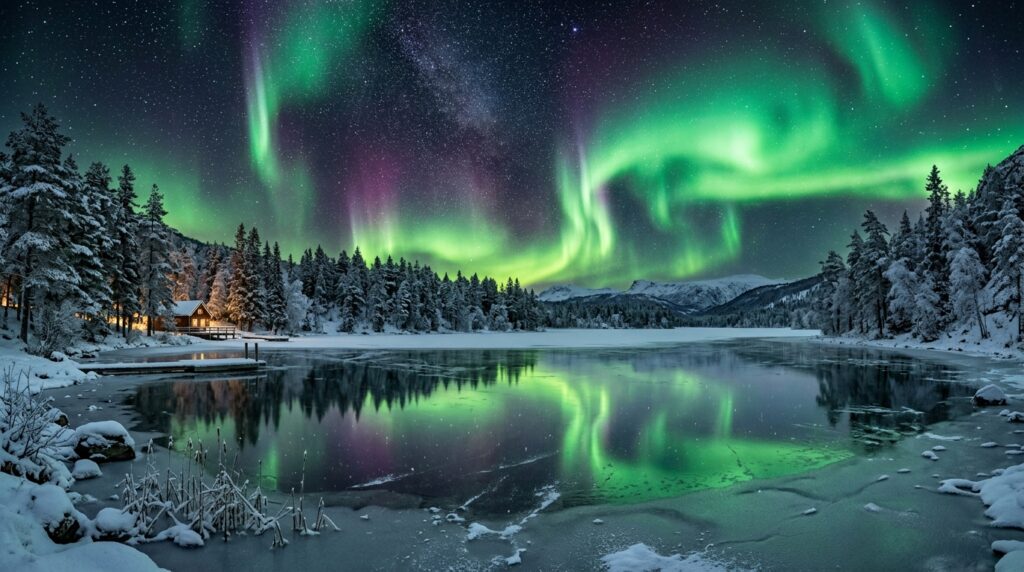
7. Northern Lights Dancing Above a Frozen Lake
The Northern Lights, also known as the Aurora Borealis, create one of the most extraordinary natural spectacles on Earth. Watching vibrant waves of green, purple, blue, and pink light dance across the night sky is an unforgettable experience, and photographing this phenomenon above a frozen lake makes the scene even more magical. The mirror-like surface of the ice reflects the colorful lights, doubling their beauty and creating a breathtaking composition.
Capturing the aurora requires careful planning and patience. Photographers often travel to remote northern regions where dark skies and minimal light pollution provide the best viewing conditions. Cold winter nights may be challenging, but they reward those willing to wait with stunning displays that can change shape and intensity within seconds.
A sturdy tripod is essential for long-exposure photography, allowing the camera to gather enough light to reveal the brilliant colors and intricate patterns of the aurora. Wide-angle lenses are commonly used to include the expansive sky, frozen lake, and surrounding snow-covered pine trees, creating a balanced composition that emphasizes the vastness of the landscape.
The frozen lake adds a unique element by reflecting both the stars and the dancing lights above, making the photograph feel almost surreal. Snow-covered trees and distant mountains help frame the scene while enhancing the peaceful atmosphere. Every aurora display is different, making each photograph a one-of-a-kind work of art.
Beyond its incredible beauty, the Northern Lights inspire feelings of wonder, curiosity, and appreciation for the natural world. For centuries, cultures around the world have associated the aurora with myths and legends, adding mystery to an already remarkable phenomenon. These stunning landscape photographs are highly sought after for travel magazines, fine art prints, desktop wallpapers, calendars, and photography exhibitions, where they continue to amaze viewers with their unforgettable display of nature’s brilliance.
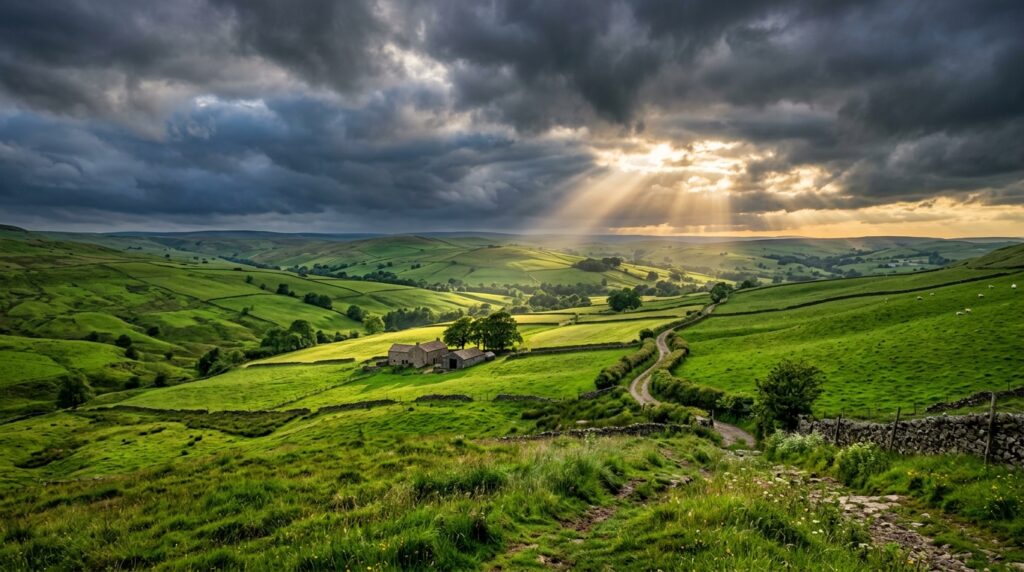
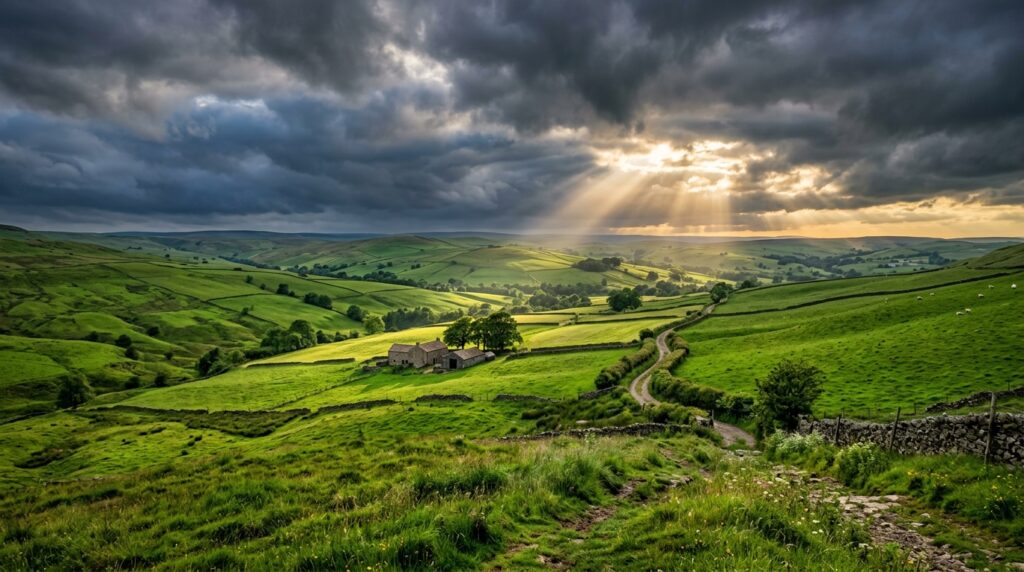
8. Rolling Green Hills Beneath Dramatic Clouds
Rolling green hills have long been admired for their peaceful beauty and timeless appeal. When paired with dramatic clouds stretching across the sky, they create a landscape that feels both calm and powerful. Gentle slopes covered in lush grass seem to flow endlessly toward the horizon, while towering cloud formations add depth, movement, and emotion to the composition. This combination makes for an unforgettable landscape photograph that captures the balance between earth and sky.
Photographers often visit these locations during spring and early summer when the hills are at their greenest. Fresh grass, wildflowers, and scattered trees bring life and texture to the landscape, while changing weather conditions create ever-evolving skies. Dramatic storm clouds mixed with rays of sunlight breaking through the clouds can produce breathtaking lighting that transforms an ordinary scene into a remarkable work of art.
A wide-angle lens is ideal for emphasizing the vastness of the hills while including the expansive sky. Positioning the horizon according to the rule of thirds helps create a balanced composition, allowing either the land or the sky to become the dominant feature depending on the mood. Early morning and late afternoon provide soft, warm lighting that enhances the vibrant green tones and creates gentle shadows across the rolling terrain.
These peaceful landscapes symbolize freedom, renewal, and harmony with nature. Their simple beauty invites viewers to slow down, breathe deeply, and appreciate the quiet moments that are often overlooked in everyday life. Whether found in rural countryside, national parks, or open grasslands, rolling hills remain one of the most beloved subjects in landscape photography.
These photographs are perfect for travel websites, calendars, desktop wallpapers, nature magazines, Pinterest inspiration, and home décor. Their timeless beauty and soothing atmosphere make them favorites among photographers, travelers, and anyone who appreciates the natural world.
9. Coastal Cliffs Overlooking the Ocean at Sunset
Towering coastal cliffs meeting the endless ocean create one of the most dramatic scenes in landscape photography. As the sun begins to set, warm golden light spreads across the rugged rocks, while waves crash against the shoreline below. The combination of powerful natural forces, colorful skies, and breathtaking viewpoints produces images filled with beauty, emotion, and adventure.
Photographing coastal landscapes requires careful attention to timing, weather, and composition. The golden hour before sunset offers soft, warm light that enhances the texture of rocky cliffs and adds brilliant reflections across the water. Colorful skies painted with shades of orange, pink, purple, and gold create a stunning backdrop that changes every few minutes, making every sunset unique.
A wide-angle lens allows photographers to capture the vast coastline while including dramatic foreground elements such as wildflowers, rocky ledges, or winding pathways. Long-exposure techniques can transform crashing waves into smooth, flowing water, adding a sense of motion and contrast against the solid cliffs. Safety is always important when photographing coastal areas, especially near steep edges and changing tides.
Beyond their visual impact, coastal cliffs symbolize strength, resilience, and the enduring power of nature. They remind us of the constant interaction between land and sea, shaped over thousands of years by wind and waves. Standing on a cliff overlooking the ocean often inspires feelings of freedom, reflection, and wonder.
These breathtaking coastal photographs are widely used in tourism campaigns, travel blogs, fine art prints, magazines, calendars, and social media. Their dramatic scenery appeals to outdoor enthusiasts, hikers, photographers, and anyone who dreams of exploring spectacular natural landscapes around the world.
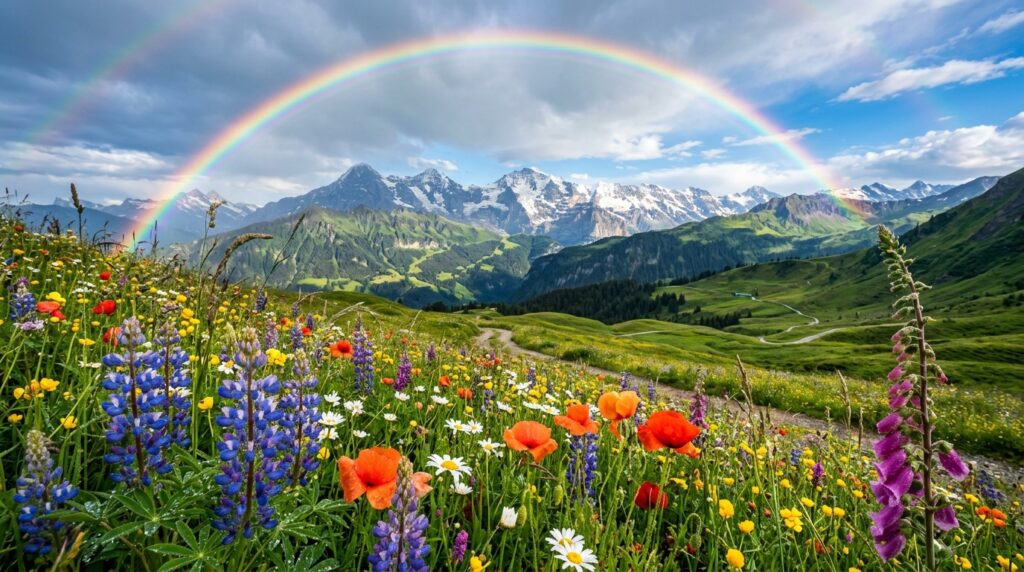
10. Wildflower Meadow Beneath a Rainbow After Rain
A blooming wildflower meadow beneath a vibrant rainbow is one of nature’s most joyful and colorful displays. After a gentle rainfall, the landscape comes alive with fresh greenery, sparkling water droplets, and brilliant flowers in every shade imaginable. When sunlight breaks through the retreating clouds, a rainbow arches gracefully across the sky, creating a magical scene that feels almost too perfect to be real.
Photographers often wait patiently for these rare moments because they combine several ideal conditions at once. Rain cleanses the air, making colors appear richer and more vibrant, while sunlight creates the perfect opportunity for a rainbow to form. Water droplets resting on flower petals catch the light, adding tiny sparkling highlights that enhance the image’s beauty.
Composition is key to creating a balanced landscape photograph. Colorful wildflowers provide an attractive foreground, while rolling hills, distant mountains, or scattered trees add depth to the middle ground. Positioning the rainbow so it complements rather than overwhelms the scene creates harmony throughout the composition. A wide-angle lens is often used to capture both the expansive meadow and the full arc of the rainbow whenever possible.
This type of landscape symbolizes hope, happiness, renewal, and the beauty that often follows life’s storms. It reminds viewers that difficult moments can lead to extraordinary experiences and that nature always has the ability to surprise us with moments of breathtaking beauty.
Wildflower meadows and rainbows are among the most popular subjects for calendars, greeting cards, travel publications, fine art prints, wallpapers, Pinterest boards, and photography portfolios. Their vibrant colors and uplifting atmosphere inspire optimism and encourage people to spend more time exploring the beauty of the natural world.