

Quick Facts
- Who: Karl Deisseroth, 54 — Stanford professor and father of five
- The prize: The 2026 Nobel Prize in Physiology or Medicine, shared with Peter Hegemann and Georg Nagel, for discoveries that made optogenetics possible
- The viral moment: A Stanford video of Deisseroth telling his children the news — screams, hugs, and one unforgettable line: “Dad, you’ve won all the prizes!”
- The morning after: Before any celebration, he took an hour off to make his kids’ school sandwiches — turkey-and-salami for two of them, almond butter-and-honey for his daughter Sophie
- The caption that said it all: “New Nobel laureate, same school lunch duty”
The call came after midnight. Karl Deisseroth, 54, a professor of bioengineering and of psychiatry and behavioural sciences at Stanford, was asleep after a long night’s work when the phone rang with news that would change his life — the Nobel Assembly in Stockholm was on the line.
He had just won the 2026 Nobel Prize in Physiology or Medicine. He would share it with German researchers Peter Hegemann and Georg Nagel for discoveries that made optogenetics possible — a technique that uses light to control the activity of individual nerve cells in a living brain, and that has already transformed how scientists study the brain and treat disease.
But what the internet fell in love with was not the science. It was what happened next, at home, with his family.
The Call That Came After Midnight
Deisseroth had worked late and barely slept when the Nobel Assembly’s call woke him in the early hours of Monday, 5 October. Recalling the moment later, he told the Associated Press: “I almost felt as if I’d lost the power of forming words.” He added, quietly: “No real sleep was achieved.”
His wife, Michelle Monje-Deisseroth — herself an MD-PhD and Stanford faculty member — was there for the surreal first minutes. But four of their five children were still asleep, and the biggest briefings of the day were still to come.
“Dad, You’ve Won All the Prizes!”

Illustration: the moment the children learned their father had won the Nobel Prize.
A video released by Stanford captured what happened as the news travelled through the house, and it is impossible to watch without smiling. When Deisseroth told his two youngest daughters, 13-year-old Emma and 10-year-old Sophie, they broke into screams of excitement and lunged at him for a hug. Sophie, breathless, summed it up for the family record: “Dad, you’ve won all the prizes!”
Next was Hudson, 16, still in his pyjamas. “I just got a phone call this morning that I won the Nobel Prize,” his father told him in the same calm, unassuming tone he might use for any announcement. Hudson looked stunned — then hugged his father, and the two traded high-fives before a tight embrace with both parents.
His eldest son, Alexander, 18, was already up at Stanford, where he is a freshman. When his mother messaged him that his father had received a call from Stockholm, he understood immediately what it meant. He called home, then cycled over to join the celebration. “We’re insanely proud of him,” Alexander said.
Sharing the clip, the Stanford University account wrote the caption that would be quoted around the world: “The most important briefings of the day.”
Then Came the Sandwiches
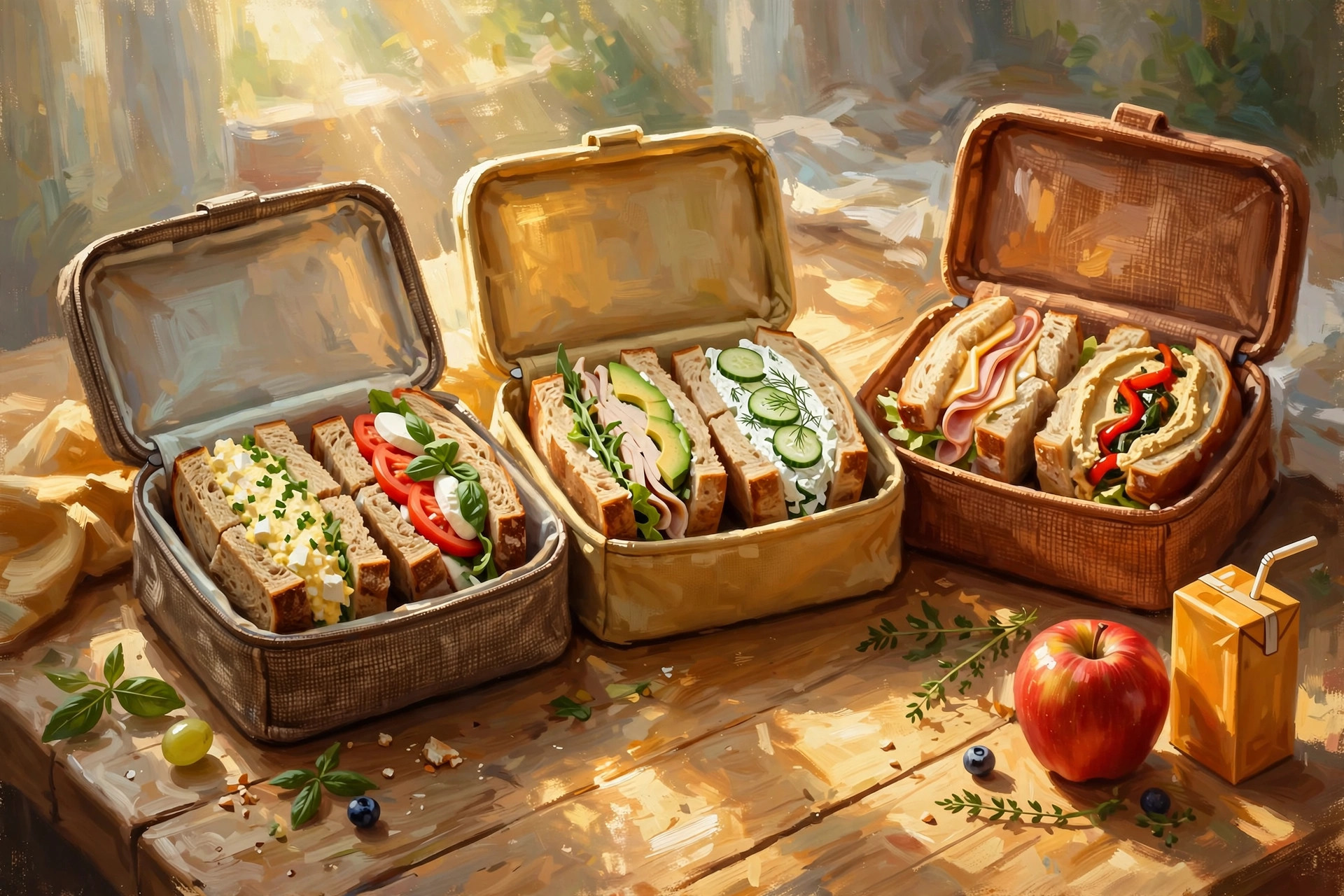
Illustration: sandwich duty — before the celebrations began.
Here is the part that turned a feel-good video into a global talking point. With congratulations pouring in and media requests stacking up, Deisseroth did something no one expected him to prioritise: he asked for an hour-long break, beginning at 6:30 a.m., to make his children’s school lunches before they left for school.
Six sandwiches, made by the newest Nobel laureate in medicine — with different fillings for each child, because he knows exactly what each of them likes. Turkey-and-salami for two of them. Almond butter-and-honey for Sophie.
Stanford’s own caption for the moment could not have been better: “New Nobel laureate, same school lunch duty.”
Six Sandwiches, Three Children, One Nobel Prize
It is easy to treat this as a cute anecdote and miss why it landed so hard. The contrast is the story: on the same morning the world was recognising one of the most consequential careers in modern neuroscience, the Deisseroth household ran on the same schedule it always runs on — breakfast, lunches packed, children out the door.
There is something quietly radical about that. Deisseroth could have handed the sandwiches to anyone. He could have said, “Today is different.” Instead, he showed his children that the biggest morning of his professional life did not cancel the small, ordinary morning of their lives. The work that won the prize matters. The sandwiches matter too — because they are part of what the prize was for, in the end: a life.
And when someone asked how he planned to celebrate, his answer was remarkably simple: “Get back to work. We have a lot of things still to discover, and a lot of people to help.”
Timeline: Nobel Morning, Hour by Hour
- After midnight, Monday 5 October: The Nobel Assembly’s call wakes Deisseroth — he has won the 2026 Nobel Prize in Physiology or Medicine
- Early morning: He tells daughters Emma (13) and Sophie (10) — screams, hugs, and “Dad, you’ve won all the prizes!”
- Still morning: He tells 16-year-old Hudson, still in pyjamas — stunned silence, then hugs and high-fives
- Morning: Alexander, 18, gets his mother’s message at Stanford and cycles home to join the family
- From 6:30 a.m.: Deisseroth takes an hour off from the world’s congratulations to make six sandwiches for his children’s school lunches
- Days later: Stanford’s videos keep travelling — the most shared moment of a Nobel week
Why This Story Matters
Every Nobel season brings its own headlines, but this one will be remembered less for the prize citation than for the morning around it. The videos work because they are unscripted and unguarded: a brilliant man, barely awake, being mauled with love by his children — and then standing at a kitchen counter, doing what millions of parents do every morning.
Success, the morning showed, does not have to look like a ceremony. Sometimes it looks like six sandwiches, made with care, at 6:30 a.m., by someone the world has just decided is one of its finest minds.
The comments, the shares, the reposts all carry the same message: this is what it looks like to have your priorities right.
Have a real-life story the world should hear? Share it with us — the best ones get featured.