

Quick Facts
- Who: Karen Davey, 42, a mum-of-four and grandmother-of-one from Brynna, near Bridgend in South Wales
- The problem: A heart transplant ten years ago saved her life — but the medicine keeping her heart going was slowly destroying her kidneys
- The wait: Stage three kidney failure, dialysis four hours a day, three days a week — and no match among family or friends
- The breakthrough: Gary Summerfield, 60, saw her Facebook appeal after a night shift and volunteered to be tested
- The result: A six-hour operation in July gave Karen a working kidney
Ten years ago, Karen Davey survived a heart attack and a heart transplant. She went home, raised her four children, and got on with her life. She knew the medicine that kept her new heart beating could one day damage her kidneys. What she did not know was that a stranger scrolling through Facebook after a night shift would be the one to save her a second time.
The Heart Attack That Changed Everything
Ten years ago, Karen was watching her son play football when she had a heart attack.
What followed was the hardest chapter of her life — and its most miraculous. Karen received a heart transplant, a gift from a donor family she will never know. She recovered and rebuilt her life. But her doctors gave her an honest warning alongside the good news: the anti-rejection drugs that would keep her new heart safe are toxic to the kidneys. One day, they told her, her kidneys would probably fail.
For years, that day stayed in the future. Then, about three years ago, it arrived.
When the Medicine That Saved Her Started Hurting Her
Karen’s kidney function began to deteriorate. She slipped into stage three kidney failure, and the decline kept going. Soon she was on dialysis — four hours a day, three days a week — hooked up to a machine doing the job her kidneys no longer could.
Her family and friends stepped forward to be tested. Every one of them wanted to help. But Karen has a rare blood type, and none of them was a match.
The numbers were bleak. In the UK, people waiting for a kidney from a deceased donor can wait two to three years, according to NHS Blood and Transplant. With a living donor, the wait can fall to around three to six months. Karen needed a living donor — and she had run out of people to ask. So she asked the internet.
The Appeal She Never Expected to Work
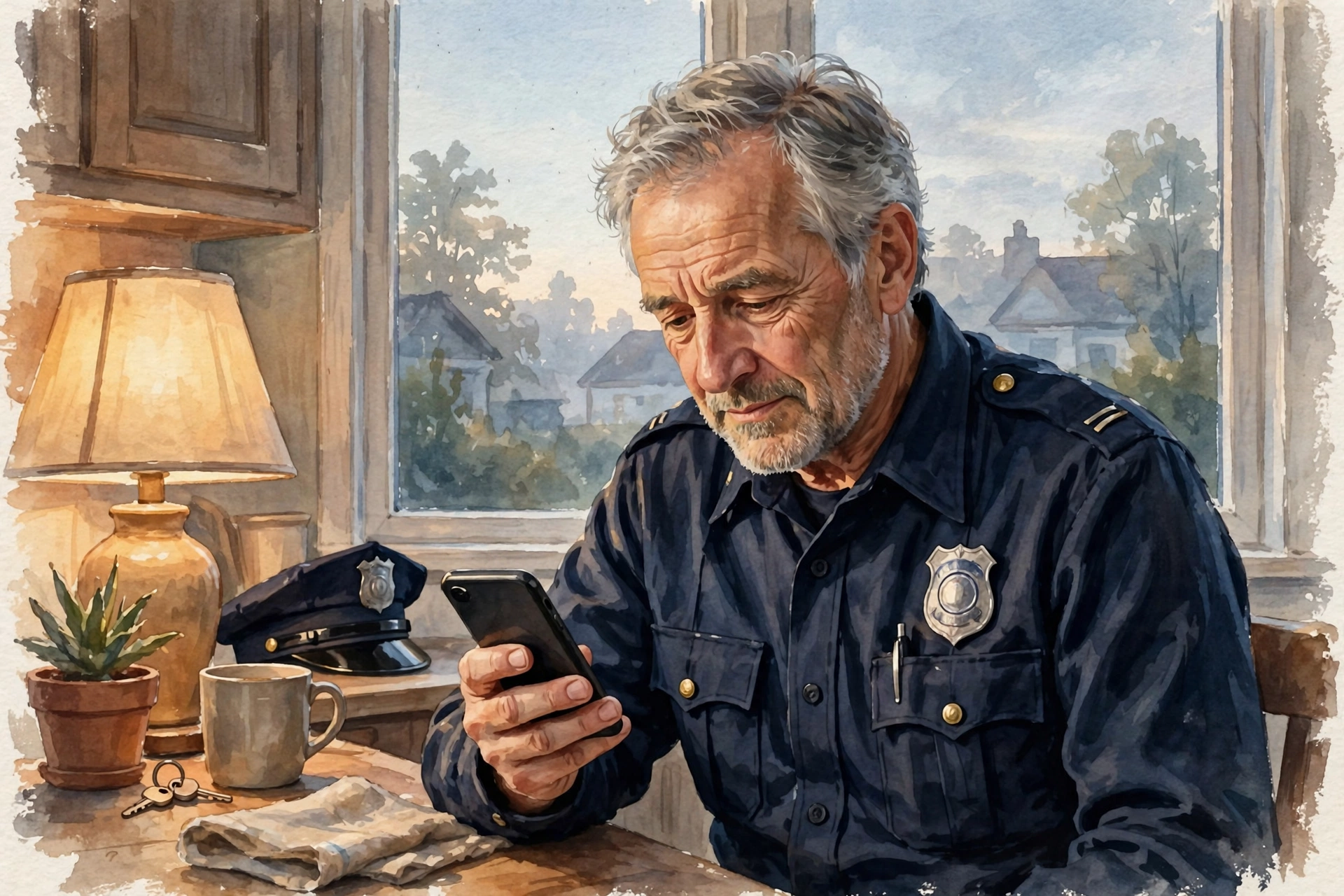
Illustration: Karen’s Facebook appeal reached a stranger she had never met.
Karen wrote a Facebook post explaining her situation — a mum-of-four who needed a kidney, whose family had all been tested, who was running out of options. She did not expect it to work.
But this one travelled — and reached a man who had never heard her name.
A Stranger Coming Home From a Night Shift
Gary Summerfield, 60, a security guard from Tredegar in Blaenau Gwent, had just finished a night shift and was scrolling through Facebook at home when Karen’s appeal appeared.
He read it. And then he read it again.
Karen was roughly the same age as his own daughter. Her youngest child was about the same age as his grandson. He thought about what it would mean for those children to grow up without their mother — and what he would want a stranger to do if it were his own daughter asking.
So he sent Karen a message. He was a complete stranger, he told her, but he would like to help. Karen was blown away: a man she had never met was offering to give her one of his kidneys.
Timeline: From a Facebook Post to a New Kidney
- About ten years ago: Karen suffers a heart attack while watching her son play football and receives a heart transplant.
- About three years ago: Doctors discover her kidney function is deteriorating. She reaches stage three kidney failure and begins dialysis — four hours a day, three days a week.
- Family testing: Relatives and friends are tested, but Karen’s rare blood type means none matches.
- The appeal: With her options running out, Karen posts an appeal for a kidney donor on Facebook.
- The reply: Gary Summerfield, 60, a security guard from Tredegar, sees the post after a night shift and messages Karen to volunteer.
- Testing: Gary passes extensive assessments — compatibility, psychological, blood and cholesterol checks — and is confirmed as a match.
- July: The pair undergo a six-hour transplant operation. Karen later says she feels “100 times better”.
- Afterwards: Karen calls Gary her hero. The two families stay in touch — and stay friends.
Six Hours That Changed Two Lives
Illustration: one kidney, freely given, changed two lives.
Before any operation, Gary had to pass a battery of tests — compatibility, psychological, blood and cholesterol checks. Gary passed them all.
Then, in July, Karen and Gary went into surgery. The transplant operation lasted six hours. When it was over, Karen had a working kidney — and Gary had one fewer, and a story he would tell for the rest of his life.
Recovery followed. Karen began to feel like herself again. She later said she felt “100 times better” than she had before the operation. The dialysis machine, the exhaustion, the slow decline — all behind her, because a stranger decided she needed one of his kidneys more than he needed two of them.
One Kidney, Two Lives Changed
Gary has said donating his kidney ranks alongside getting married and having his children as one of the top three things in his life. He never had second thoughts. Seeing Karen well again, he said, was simply amazing.
Karen calls Gary her hero. She says she was lucky to find someone like him — but that there are good people out there, people who want to help. She has loved getting to know him, and the two families plan to stay friends.
A transplant is a medical procedure. What happened here was bigger: two families who had never met became part of each other’s lives, because one man stopped scrolling and decided to act.
Every day, thousands of people are waiting for an organ transplant. Most wait quietly, the way Karen did — just people hoping someone, somewhere, will say yes.
Gary Summerfield said yes. And because he did, four children still have their mum — and a stranger became family.
Sources: SWNS, Edinburgh Live, Brit Brief. This article is an original retelling based on those reports.